Kindergarten checklist for parents: before the first day
By Babs Team · · Updated · 8 min read

Kindergarten starts with one small backpack and a long trail of adult work: the placement deadline, the aftercare form, the Wednesday early dismissal, and the person who can actually make pickup. This checklist keeps those pieces together and leaves your child room to be five.
Your school's instructions set the rules. Babs is the family operating system for modern households. It scans connected Gmail messages for possible dates, to-dos, and changes, then puts them in front of a parent for review.
1. Finish enrollment and health forms
District lists differ, sometimes down to the age of an acceptable utility bill. Start with the placement email or student portal.
- Accept the placement. Save the confirmation and the next deadline.
- Gather the listed records. These may include proof of age, proof of address, and parent or guardian ID.
- Send immunization and health records. State requirements and exemption rules vary.
- Complete emergency contacts and permissions. Include current numbers and every adult allowed to pick up your child.
- Share current support records. Follow the school's process for an IEP, 504 plan, evaluation, language record, or other support plan.
- Arrange school-day medical support. Ask the nurse or front office about allergies, medication, and other health needs.
- Finish the separate registrations. Bus service, meals, aftercare, and enrichment may have their own forms and deadlines.
Keep the confirmations where the adults handling the start can find them.
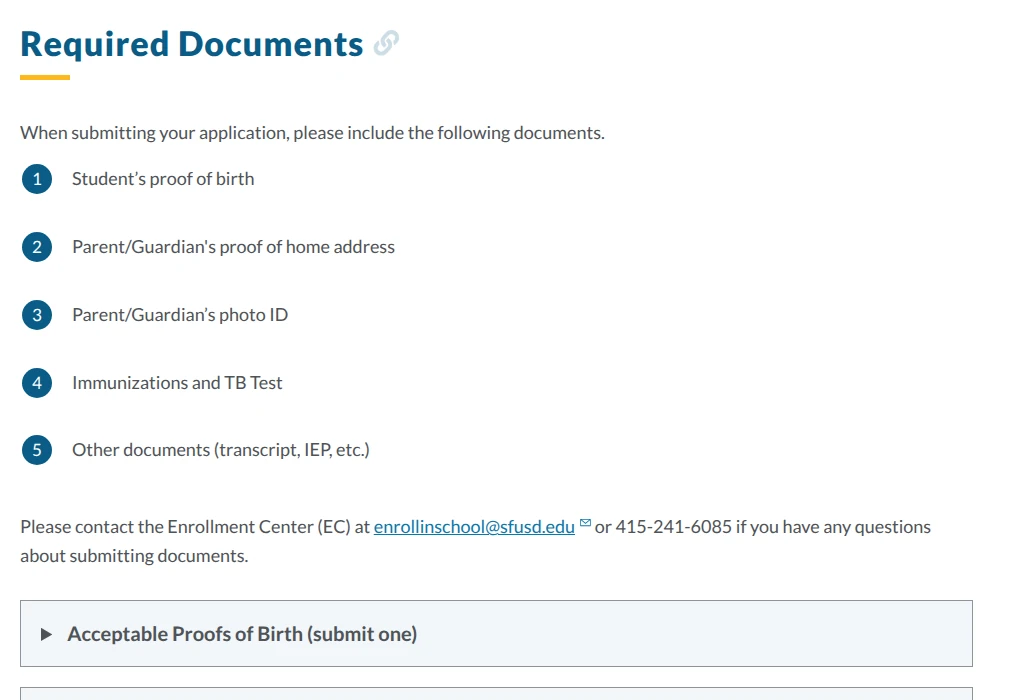
San Francisco Unified, for example, asks for proof of birth, proof of home address, parent or guardian photo ID, immunization and tuberculosis records, and other records such as an IEP. Its district document list shows why the local instructions matter.
2. Open the school accounts and alerts
The first month may involve a district portal, a classroom app, an aftercare account, and a meal balance. Open the channels your school actually uses.
- Open the student or family portal for forms, records, attendance, and school notices.
- Join the teacher or classroom app for class updates and messages.
- Turn on email and text alerts for closures, urgent notices, and schedule changes.
- Set up meal, transportation, and aftercare accounts, when needed.
- Set family communication preferences for translation, interpretation, or accessibility.
- Save a short contact list with the teacher, front office, attendance line, nurse, transportation office, and aftercare.
Where the school allows separate accounts, give each parent or caregiver who needs access an authorized login. A grandparent doing Thursday pickup needs the dismissal instructions and front office number. They do not need someone else's portal password.
3. Put the first month on the family calendar
The district calendar gives you the outline. The welcome email usually carries the detail that changes a workday.
- Orientation, a classroom visit, or meet-the-teacher time
- The first day, including a staggered arrival or kindergarten-only schedule
- Daily arrival and dismissal, plus the first early-release or half day
- Closures, teacher workdays, conferences, and the first break
- Aftercare and bus details: first day, hours, location, stop, and pickup deadline
- Back-to-school night, picture day, and other first-month events
- Forms, payments, supply drop-offs, and sign-ups, each with its own due date
A field trip and its permission-slip deadline are two calendar entries.
School information rarely arrives once. Babs connects to Gmail and uses confirmed context about your children, schools, and activities to surface possible events, to-dos, deadlines, and schedule changes for review. A parent reviews each suggestion, and accepted events go to Google Calendar or Apple Calendar. When a later email moves orientation, Babs flags the new details so a parent can review them and keep the calendar current.
Each parent gets a separate login to the shared household view, including suggested events and to-dos and the Lineup, a preview of the week ahead. The early dismissal no longer depends on one person forwarding the right email.
If kindergarten begins beside a fall activity, our pre-season playbook covers registration, gear, practices, and rides.
4. Make the drop-off and pickup plan
A five-year-old can learn the plan. The adults still have to make it true.
- Name the regular morning adult. Add the entrance, drop-off window, and time to leave home.
- Choose the usual dismissal plan. Bus, car line, walker, aftercare, or an authorized adult.
- Write down weekday exceptions. Early release and Thursday pickup by Grandpa are the details that vanish first.
- Add pickup adults to the school's list. Use full names and current phone numbers.
- Use the school's same-day change process. The family text tells the adults. The school needs its own update.
- Choose a sick-day contact and a backup who can leave work.
- Block the full pickup window on work calendars, including travel and car-line time.
Tell your child the short version: “After school, you go to aftercare. Grandpa will meet you at the front desk.” Repeat it on the morning the plan changes.
5. Pack what the teacher requests
The back-to-school aisle has never met your child's teacher. Some classrooms pool crayons and glue. Others want labeled supplies. Wait for the class list when you can.
- Backpack large enough for the school folder
- Water bottle your child can open, close, and recognize
- Lunchbox and snack container, if needed, with manageable lids
- A full change of clothes, including underwear and socks, in the requested bag
- Weather gear for the season and school policy
- Classroom supplies in the quantities and brands the teacher names
- Folder, headphones, rest item, or art shirt only when requested
- Medical items delivered through the nurse or office process
- Name labels on the items the school asks families to label
Have your child carry the packed bag once and open the real lunch containers at home. A water bottle that behaves for an adult can become a full-body project at noon.
6. Practice a few school-day moves
Kindergarten readiness lists can feel like entrance exams. Treat these as useful rehearsals. Head Start's whole-child view includes children ready for school, families ready to support learning, and schools ready for children.
- Say first and last name and the names of primary caregivers
- Ask a trusted adult for help with the bathroom, a lost item, an injury, or confusion
- Follow the bathroom and handwashing routine with the support your child uses
- Open and close the backpack, coat, water bottle, and food containers
- Follow a short direction, such as “Hang your bag, put the folder in the bin, and sit on the rug”
- Take turns, move to a new activity, and listen to a short story
- Recognize the dismissal plan and the adult who will meet them
- Practice a short goodbye and the reunion at the end of the day
The CDC's five-year milestones include taking turns in games, telling a short story, counting to 10, naming some letters and numbers, and buttoning some buttons. Use the list as developmental context. School entry rules and formal screening are separate.
Keep the supports your child already uses. A communication device, toileting help, mobility support, feeding support, or another accommodation belongs in the school plan and in the practice.
7. Rehearse the final week
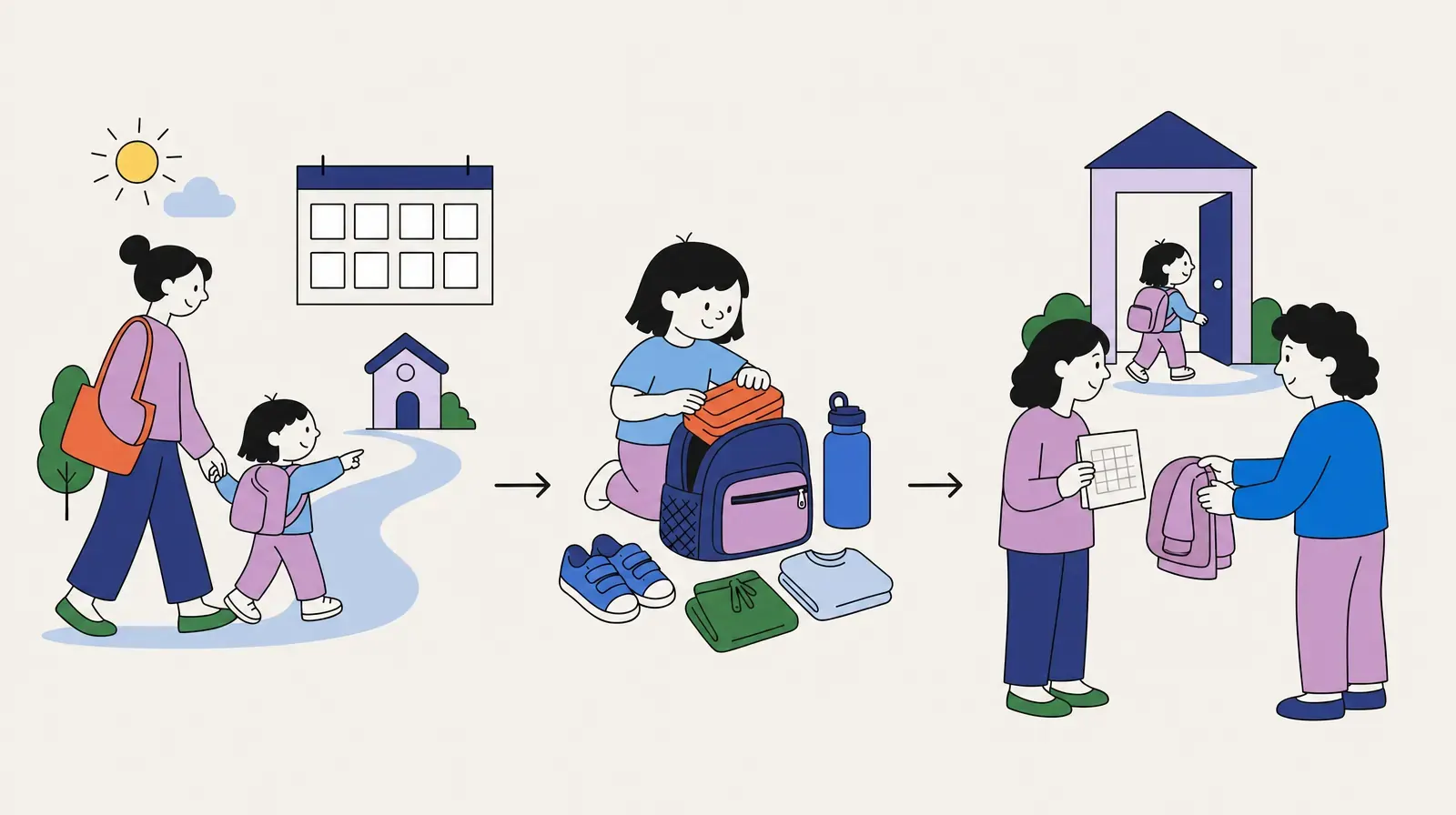
One run-through catches the backpack that will not zip and the bus stop that takes twelve minutes to reach. Keep it light. Familiarity is the goal.
One week before
- Move wake-up, breakfast, and bedtime toward the school schedule.
- Travel the real route to the entrance or bus stop.
- Practice one lunch or snack with the actual containers.
- Review the opening-week schedule for a new room, time, or aftercare detail.
The night before
- Pack the folder, food, water, spare clothes, and forms the teacher requested.
- Set out weather-ready clothes and shoes your child can manage.
- Repeat the dismissal plan and name the adult meeting them.
- Leave room in the morning for the new entrance and one slow shoe.
During the first week
- Read school messages for schedule or supply changes.
- Restock spare clothes after they come home, especially socks and underwear.
- Leave some quiet after school. A new day asks a lot of a five-year-old.
- Adjust the pickup, lunch, clothing, or leave-time detail that did not work.
Kindergarten keeps sending information after day one. Connect your Gmail to Babs. Babs can surface possible half days, form deadlines, and pickup changes from your connected messages in the shared household view for a parent to review. Your child still gets to be five. The adults get a clearer read.
Related articles
Family life · Babs
Babysitter interview questions for the after-school hours
Ask about the after-school job your family actually needs, with practical follow-ups, fictional candidate replies and separate reference questions.
Family life · Babs
Thanksgiving games for families, including the very full ones
Six no-print Thanksgiving games for families, with short rounds, clear rules, and ways for kids and adults to play together, including from their chairs.