Thanksgiving games for families, including the very full ones
By Babs Team · · 10 min read
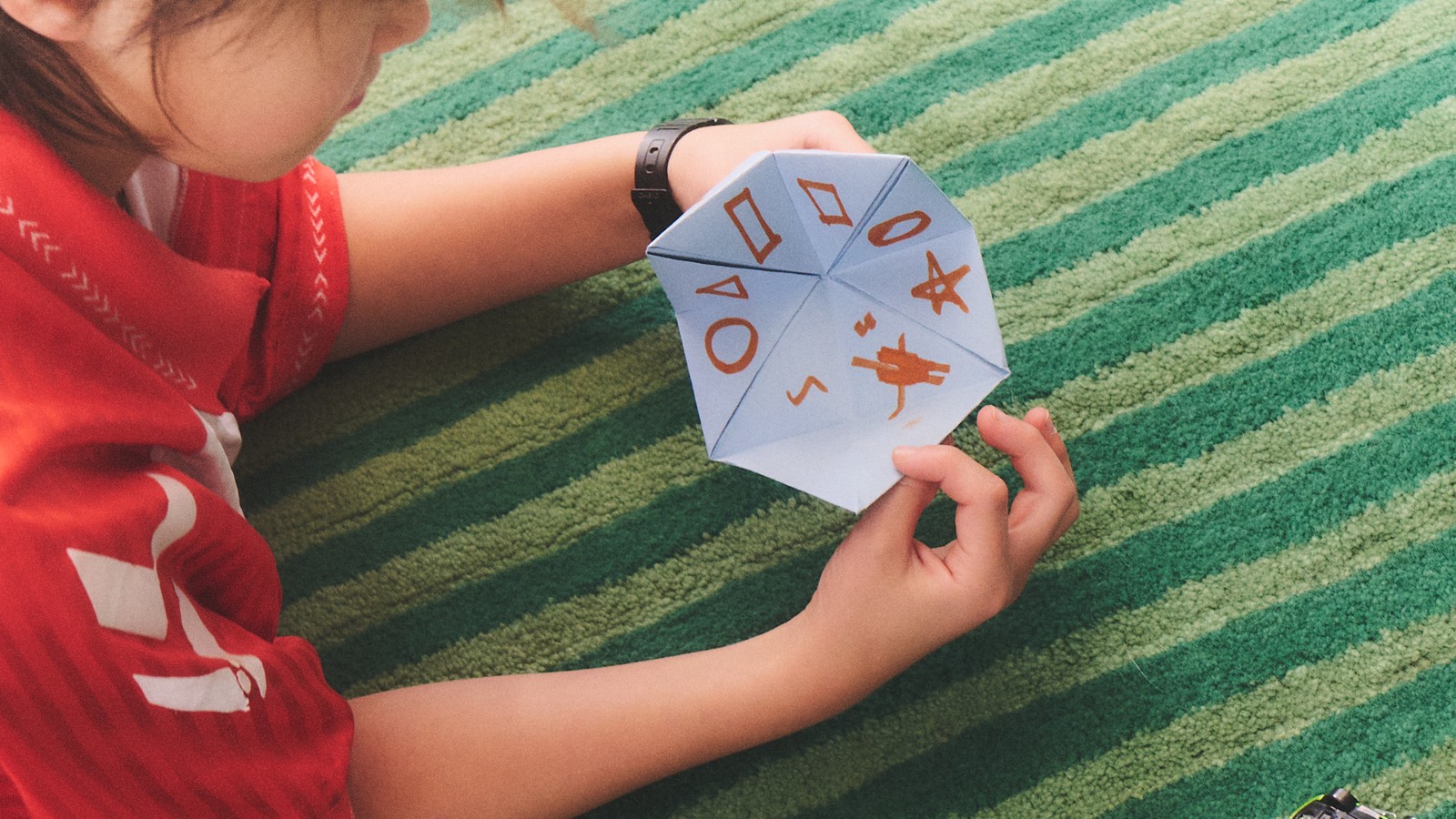
Thanksgiving dinner can leave your group divided on one important issue: whether standing up is still an option. The kids may be ready to run laps while the adults would prefer to negotiate from their chairs. These six no-print Thanksgiving games give you something to enjoy together, with rules you can explain quickly and a stopping point before anyone starts asking about pie.
Pick a game that suits the room
You know who'll happily impersonate a turkey and who'd rather chew another mouthful of dry stuffing. Give the willing performers their moment, or choose something everyone can play sitting down.
| Sound like your family? | What to play |
|---|---|
| Everyone is too full to leave the table. Asking them to find a pencil feels ambitious. | Stuffed and stumped: 20 questions. 2–8 players, about 5–10 minutes. Stay seated; no supplies or setup. |
| You'd enjoy a friendly argument about something with considerably lower stakes than politics. | Thanksgiving odd-one-out. 3–8 players, about 5–10 minutes. Seated or standing; no supplies. Read the prompts below. |
| A few relatives are ready to perform. Others would like to enjoy the show from their chairs. | Thanksgiving charades. 4–10 players, about 10–15 minutes. Write six paper slips; use a timer. Leave room for an actor. |
| Everyone will draw, provided nobody expects the results to go in a frame. | Thanksgiving picture swap. 3–8 players or pairs, about 10–15 minutes. Use a writing surface; fold one sheet per player into three panels and gather pencils. |
| The kids want a turn without reading. An adult has made a bold claim about their excellent memory. | What's missing? 2–8 players, about 5–10 minutes. Use a table everyone can see; arrange six objects and find a covering cloth. |
| You want a little movement before the conversation returns to politics. | Turkey-roost toss. 2–6 players, about 10–15 minutes. Use open floor or yard space; put out a laundry basket and three rolled-up pairs of socks. |
These are our holiday takes on familiar games. The group sizes and playing times are rough guides; allow extra time for setup when paper or props are involved.
Children who aren't reading yet can still join in. Whisper their charades prompt, choose a 20-questions answer together, or pair up for picture swap, which needs reading and writing. What's missing? lets everyone work from the objects in front of them.
Stuffed and stumped: 20 questions
This takes about 5–10 minutes for three rounds with 2–8 players. Everyone can stay seated, and there's nothing to set up.
One person thinks of a thing, and everyone else tries to work out what it is. Your biggest physical commitment is asking a question.
- One player secretly chooses a familiar autumn or Thanksgiving object, such as a mitten, a rake, a parade balloon, or a football. Tell everyone the answer is a thing, so they can rule out people and places.
- Go around the other players, asking one yes-or-no question per turn. Keep the same order until someone guesses correctly or the group reaches 20 questions. Count aloud. A direct guess also uses a question: “Is it a football?” counts.
- Guess the object within 20 questions and the group wins the round. Otherwise, the player reveals the answer.
- Switch who chooses the object after each round. Play three rounds, then stop or start another set.
With “rake” as the answer, the questions could go: “Do you use it outside?” Yes. “Does it have wheels?” No. “Do you use it with leaves?” Yes.
A child can choose their answer with a partner, who helps answer questions without giving extra clues. Pick something everyone knows. The mystery object gets considerably less fun when it turns out to be a souvenir only one person has ever seen.
Thanksgiving odd-one-out
Allow about 5–10 minutes for six puzzles with 3–8 players. Play seated or standing, with one person reading the examples from a phone. You won't need game supplies.
Read out four words and ask which one doesn't belong. The fun is in the explanation, especially when someone spots an answer you hadn't considered. People who enjoy making their case can do so without a timer cutting them off.
- Read a set of four words aloud. Repeat them whenever someone asks.
- Go around the group, giving each person a chance to pick an odd word and explain why. Anyone can pass.
- Accept an answer when the other three words share a feature that the chosen word doesn't. More than one answer can work.
- Stop after six sets. Skip the scorekeeping; the explanations are the game.
Try these sets:
- Mitten, scarf, coat, rake: a rake is the only one you don't wear.
- Acorn, pinecone, leaf, parade balloon: the balloon doesn't grow on a tree.
- Football, basketball, tennis ball, turkey: the turkey is a bird rather than a ball.
- Marching band, float, parade balloon, hiking boot: the first three can be parts of a parade.
- “Thank you,” “thanks,” “I appreciate it,” “good morning”: the first three express thanks.
- Red leaf, yellow leaf, brown leaf, blue sock: the sock is the only item that isn't a leaf.
“Coat” also works in the first set because the other three have no sleeves. Having written the puzzle doesn't give you the final vote. For another set, children and adults can take turns coming up with four words, then explain their own answer after everyone guesses.
Thanksgiving charades
With 4–10 players, allow about 10–15 minutes. You'll need six paper slips, a pencil, and a timer. Give the actor a spot everyone can see; they can act from a chair, too.
Charades gives the willing performers a turn and everyone else a reason to watch. The Scouts' sports charades instructions use the same acting-and-guessing idea. Write one of these holiday prompts on each slip, then fold them:
- A turkey shaking rain off its feathers
- Pulling a mitten out of a coat sleeve
- A parade balloon caught on a lamp post
- Raking leaves that keep blowing back
- A marching-band drummer with an itchy nose
- A football fan trying to cheer silently
Divide into two teams and alternate turns. One actor draws a slip and gets 45 seconds to act without speaking or making sounds. Their teammates can make as many guesses as they like. An answer with the same meaning as the prompt counts. Nobody needs to recite it word for word.
A correct answer earns the team one point. When time runs out, reveal any unguessed prompt and set the slip aside. Each team gets three turns, with a different willing actor each time where possible. The highest score wins; a tie is a shared win.
Before the timer starts, an actor can swap an unfamiliar prompt for a fall action they know. Whisper a prompt to a child who needs help reading it, or let a child and adult act together with the same time limit. People who prefer guessing can keep doing that. Thanksgiving attendance does not come with a performance clause.
Thanksgiving picture swap
Allow about 10–15 minutes for one exchange and the reveals, with 3–8 players or pairs. Each needs a sheet of paper, a pencil, and a writing surface. Fold each sheet into three horizontal panels, then open it.
Everyone draws at once, so nobody has to stand there while the family watches them attempt a turkey. A child and adult sharing a sheet count as one player.
- In the top panel, each player privately writes a short Thanksgiving picture prompt. Try “a turkey wearing rain boots,” “a leaf-shaped parade balloon,” or “a football in a nest.”
- Pass the sheet to the left. The next player reads the prompt and draws it in the middle panel, without adding words. Allow about two minutes for drawing.
- Fold the top panel behind the sheet to hide the written prompt, then pass left again. The next player writes what they think the picture shows in the bottom panel.
- Unfold the sheets and read the original prompts and final guesses aloud. One exchange completes the game, with no winner or vote on anyone's drawing skills.
“A turkey wearing rain boots” might come back as “a bird jumping in puddles.” The changed interpretation is what you're waiting to see.
Keep each prompt to one object with one unusual detail. A whole parade asks a lot of someone with a pencil and two minutes. A child who prefers drawing can share a sheet with a partner who writes the prompt and final guess, while the child draws their pair's middle panel.
What's missing?
Allow about 5–10 minutes for six reveals with 2–8 players. You'll need a table everyone can see, six distinct objects, and a cloth big enough to cover them.
The Scouts' Kim's Game instructions ask players to remember a collection of objects. For this smaller holiday version, one object disappears and everyone tries to name it.
Arrange a paper leaf, a scarf, a mitten, a toy football, a greeting card, and a pencil on the table. Use whatever you have, keeping the objects different enough to avoid a lengthy inquiry into which blue pen went missing.
- Choose one player to hide an object. Everyone else looks at the collection for about 20 seconds.
- Cover the objects with the cloth. Players look away while the chosen player removes one item and hides it out of sight, then uncovers the remaining five.
- Go around the group, giving each person one guess. Stop when someone gets it right. Reveal the missing item and give the group one point for a correct answer, or no point if everyone guessed without identifying it.
- Put the object back and let someone else hide the next one. Play six reveals, then count the group's total out of six.
Begin with four objects for a smaller challenge. For a different second game, keep all six and swap the positions of two under the cloth. The group has to name the pair that moved. Use the same guessing order and six-reveal limit, with one point for a correct pair. You get another game without another hunt for props.
Turkey-roost toss
With 2–6 players, allow about 10–15 minutes for two rounds. You'll need an empty laundry basket, three rolled-up pairs of socks, and open floor or yard space between the throwing spots and basket.
The basket is the turkey's roost. The socks are turkeys trying to land in it. That is the full extent of the crafting commitment.
- Put the basket in place. Each player chooses a throwing spot they'll use for both rounds. A chair can be a throwing spot, too.
- Take turns making three underhand tosses. A sock pair counts only if it stays inside the basket. Collect the socks after each turn and hand them to the next player.
- Add everyone's successful tosses for the first round's group total.
- Play a second round from the same spots. The group wins if it beats its first total. If every toss landed in round one, aim to match that score.
Throw in one direction, keeping the space between the player and basket empty until the turn ends. If the basket won't fit without sending socks across people or breakable objects, pick a table game.
With a shared score, a child's close toss and an adult's longer throw both add to the same total. For a new game, anyone who wants a longer throw can move their spot back before the first round begins.
Leave room for another round, or a nap
Finish one set, then let someone who wants to keep playing choose the next game. Anyone heading for the couch has cast their vote, too.
Babs helps both parents see the plans around Thanksgiving. The family operating system finds relevant events and to-dos in Gmail, including holiday travel confirmations and emailed plans. You review a suggested event before adding it to Google Calendar in one tap, and shared events and to-dos give both parents the details.
Babs is free in private beta on iOS. Join the Babs waitlist for help with the plans around Thanksgiving. Your relatives can handle the turkey impressions.
Related articles
Family life · Babs
Babysitter interview questions for the after-school hours
Ask about the after-school job your family actually needs, with practical follow-ups, fictional candidate replies and separate reference questions.
Family life · Babs
Questions to ask a preschool before you enroll
Ask preschool questions that reveal how teachers work, what the classroom day feels like, and whether the program fits your child before applying or enrolling.