AI family assistant tools for the work behind the calendar
By Babs Team · · Updated · 15 min read

The 4th-grade field-trip email is open on your phone while the pickup line starts moving. You catch the date, miss the permission-slip deadline three paragraphs later, and make a note to tell your partner. The note becomes another place to remember. An AI family assistant is useful when it removes one of those handoffs. The right choice depends on where your family’s information arrives, what the tool turns it into, and who else needs to see the result.
Start with the first handoff you want gone
A family calendar can show Friday’s field trip once somebody has found the date and entered it. The harder work often happens earlier. A school newsletter, TeamSnap email alert, camp PDF, and text from another parent arrive in different places. Someone reads each one, works out what matters, creates the event or to-do, and passes the plan along.
Sociologist Allison Daminger describes household cognitive labor as anticipating needs, identifying options, deciding, and monitoring. A tool that extracts a date helps with one part of that sequence. A tool that also catches the form deadline, gives both parents visibility, and notices a later schedule change takes a larger piece of work off the household.
Three questions separate a useful tool from a chat box that creates more copying and pasting:
- Where does information enter? Some products scan a connected inbox. Others wait for an email, screenshot, voice note, or message to be forwarded.
- What does it create, and who checks the result? The output may be a briefing, event, to-do, reminder, list, or calendar addition. Some tools ask first, some add items automatically, and some do not publish one clear rule for every feature.
- What does the household share? A group text includes several people, but the record lives in a scrolling conversation. Separate logins and a shared view keep events and to-dos visible after the chat has moved on.
Every tool here lets several family members take part, whether through a group text, caregiver roles, or shared calendars. They differ in how family information arrives and how readily parents can find the details later. They also remember different things. Ollie uses family context, Anna shares family memory, and Ohai documents remembering interactions, goals, preferences, and routines. Babs uses parent-confirmed context about children, schools, and activities, then learns from parents’ add, dismiss, and correction choices to improve which Gmail messages it surfaces.
The household still makes decisions about consent, purchases, transport, childcare, health, and what information to share about a child. The useful role for software is to make the work visible before a deadline or handoff disappears into the week.
Five family tools compared
| Tool | How information gets in | What it creates and who confirms | What the household shares | Main limitation | Access, price, and who it suits |
|---|---|---|---|---|---|
| Babs | Connects Gmail and checks for relevant school and activity events and to-dos | Suggests events and to-dos for review; an event reaches the calendar only after a parent approves it | Two parents use separate logins and both see the same events, to-dos, and the Lineup in the shared household view | Gmail and iOS only | Free; fits families whose school and activity information already arrives in Gmail |
| Ollie | Connects Google or Outlook email and calendars; interaction happens through iMessage or SMS | Produces briefings, events, to-dos, reminders, and lists; its public pages do not state that it asks before every calendar addition | A family group text, connected calendars, and shared lists | School summaries, reminders, questions, and ordinary conversation share one message thread; replies are limited by plan | Free plan; paid plans from $25/month; fits families that already coordinate in text |
| Anna | Connects email, calendars, WhatsApp, and school apps; also accepts voice and text | Captures tasks and event details and drafts messages, forms, and other actions; its published calendar-approval rules vary by source | Household roles, shared tasks, calendar, and family memory | Calendar approval varies by source, school-portal sessions may need reconnection, and broader coverage requires more account permissions | 14-day trial; Anna pricing lists $20 monthly or $16/month billed annually; iOS, Android, and web; fits families that want several connected sources |
| Ohai | Connects Gmail or Outlook accounts and calendars; also accepts forwarded email, text, voice, photos, PDFs, and other uploads | Creates events, tasks, reminders, lists, and meal plans; its pages describe both suggested and automatic calendar additions, so a parent cannot assume every feature will ask first | Circles with shared calendars and responsibilities; Ohai also remembers interactions, goals, preferences, and routines | Connected-email access can include message bodies and attachments, and trained Human Assistants may review selected content | Free trial; plans from $9.99/month; iOS, Android, and web; fits families combining schedules, tasks, documents, and meal planning |
| Gether | Uses a household email address: a parent forwards items manually, asks senders to use it, or creates rules for chosen senders; Gether does not scan a connected inbox | Automatically schedules events and tasks and sends reminders; its public pages do not document a confirmation step before those items are added, and users can edit or delete them afterward | Owner, Partner, and Carer roles in a shared browser dashboard | A parent still chooses what to send or which senders to forward, and Gether does not build a family profile over time | Web app; paid plans start at A$4.90/month; current pages disagree on trial length; fits families that want defined caregiver permissions and control over which senders feed the calendar |
Babs: for school and activity information already in Gmail
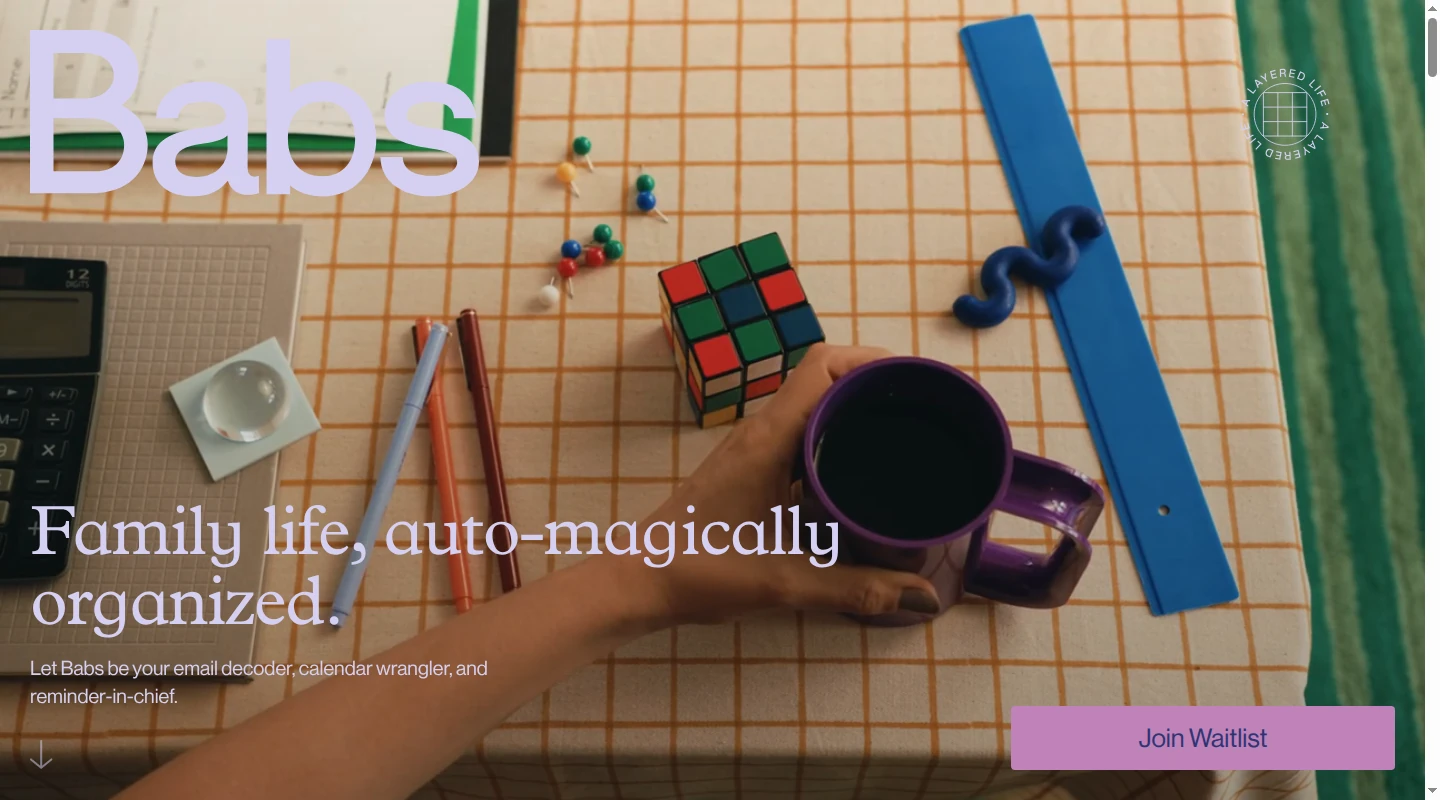
Babs is the family operating system for modern households. It fits families whose school newsletters, coach emails, camp confirmations, and activity changes already reach Gmail faster than a parent can turn them into a usable plan.
A parent connects Gmail and confirms context about the children, schools, and activities. Babs scans messages for relevant events and to-dos, then gathers possible dates, deadlines, action items, and schedule changes for review. If a later email moves practice from 5 p.m. to 6 p.m., Babs flags the new details so a parent can keep the calendar current. Google Calendar or Apple Calendar remains the home of the confirmed schedule, and Babs does not add an event without parent approval.
Babs keeps learning after setup. A parent’s add, dismiss, and correction choices help it improve which school and activity messages deserve attention. Both parents use separate logins, and both see the same household events, to-dos, and the Lineup in the shared household view. Information found in one parent’s inbox becomes visible to both parents without another copy-and-paste handoff.
Babs combines a Gmail scan, parent review, learning from parents’ choices, and a shared two-parent view. That combination can reduce manual inbox scanning while keeping parents involved in calendar changes. Babs is an iOS app and is free. It does not currently support Android, desktop, web, Outlook, or Apple Mail.
Ollie: for families that already coordinate in text
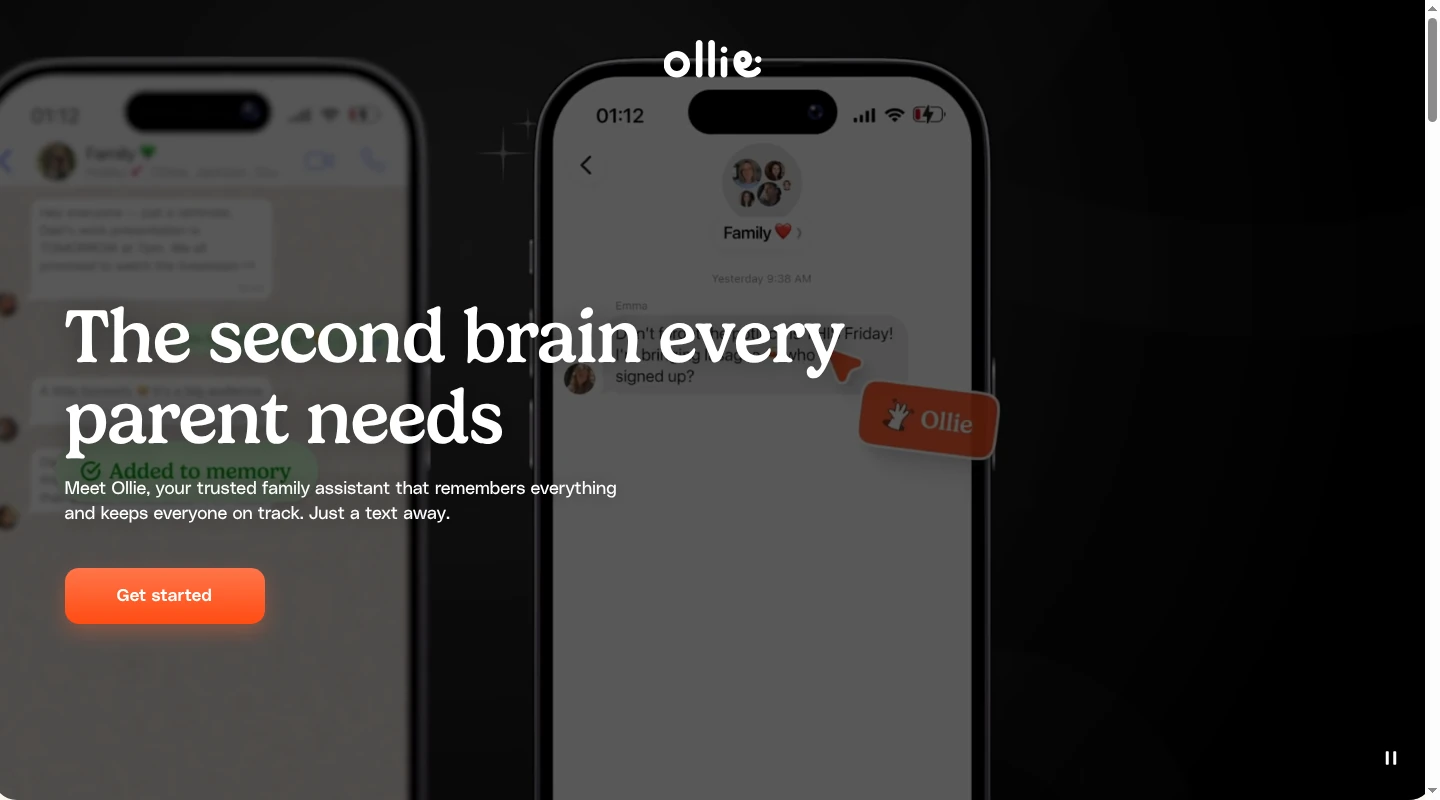
Ollie is a text-first family assistant. It has no assistant app or dedicated household dashboard. The Ollie product page describes a service that lives in iMessage or SMS, connects to Google or Outlook email and calendars, watches for relevant family information, and sends briefings and reminders back through text. A family can also ask for events, to-dos, meal plans, grocery help, and local recommendations in the same conversation. Ollie can create calendar events when asked; its public pages do not state that it asks separately before every calendar addition.
Added adults can join a group text, and Ollie says it works better with more family context. This works well for a partner who reliably reads texts and rarely opens an organizer. It also sets the product’s clearest limit. School summaries, reminder exchanges, follow-up questions, photos, and ordinary family chatter all occupy the same thread. Calendar events can move into a connected calendar, but a deadline or explanation that remains in the conversation becomes harder to retrieve after the scroll moves on.
Ollie’s current plans include a free tier with 50 monthly replies plus six additional replies each day. The $25-per-month plan includes 150 monthly replies plus ten each day, and one subscription covers the family group text. Because pricing is tied to replies from Ollie, households that want frequent briefings and follow-up questions should factor usage into the choice. Ollie fits a family that already relies on text for day-to-day coordination.
Anna: for families connecting several sources
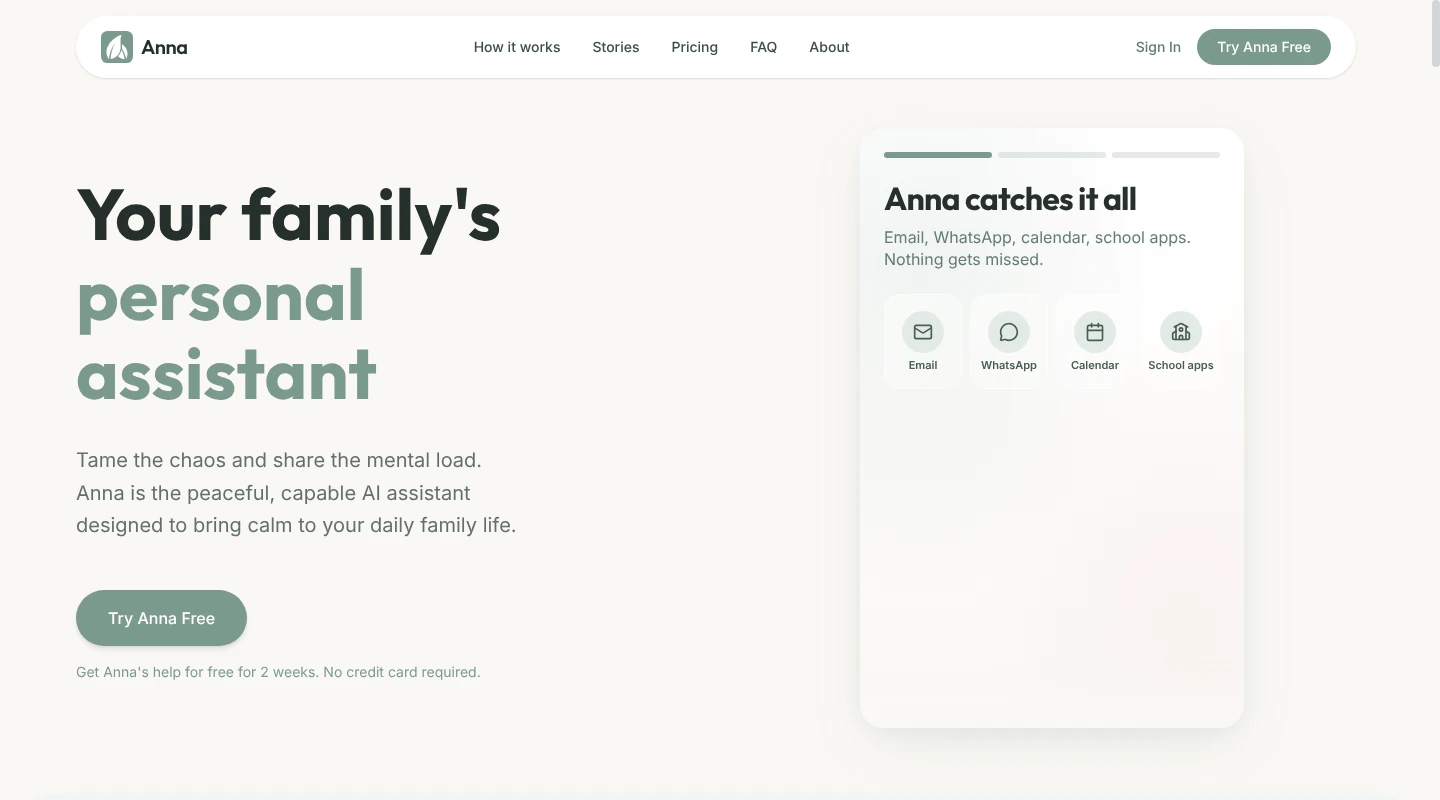
Anna accepts email, calendars, WhatsApp, school apps, voice, images, and text as inputs. It can capture tasks and event details, send a daily brief, and prepare actions such as a drafted message, form, meal order, or venue inquiry. Approval is explicit before Anna sends an order or books something.
Calendar approval is less consistent across Anna’s published guidance. Its school-portal guide says every proposed event or task gets a yes or no and nothing reaches the calendar without approval. Its school-email page says dates are added automatically and reported in the daily brief. Its security page says Anna creates or changes a calendar event only when the user asks. A family therefore cannot assume one approval rule across every source.
Anna describes initial setup as taking about five minutes. Getting its full coverage still means connecting email, calendar, WhatsApp, and school apps, then granting access to messages, calendars, contacts, files, and enabled school portals. Each connected source broadens the account and family data Anna can access. School portals also use a private live-browser session. Some Google, Microsoft, and Apple sign-in buttons do not work inside that window, and school portals may sign the session out, which requires a parent to reconnect it.
Parent, child, caregiver, and grandparent roles help Anna understand whose schedule or need is involved, and invited parents share tasks, calendars, and family memory while the household maintains the connected accounts and permissions that make that broader coverage work.
Anna is available on iOS, Android, and the web. Anna’s published plans include a 14-day trial without a credit card, then cost $20 month to month or $16 per month with annual billing. A family mainly trying to catch school and activity details in Gmail may be taking on more setup and scope than the job requires.
Ohai: for mixed household inputs and planning
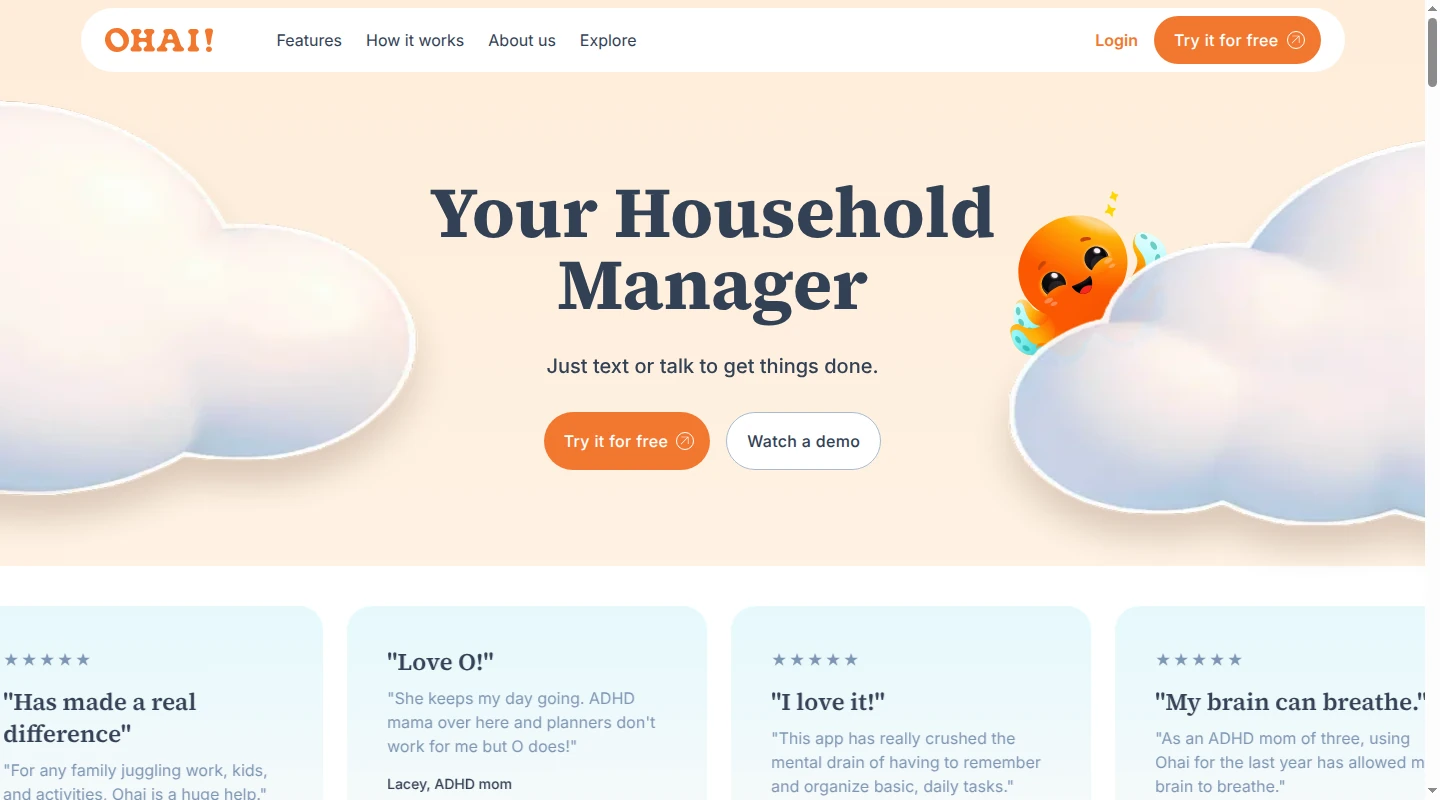
A parent can connect a Gmail or Outlook account so Ohai can identify schedule information in messages and attachments. The family can also forward an individual email to a dedicated address, text or speak a request, or upload a screenshot, photo, PDF, or other document. Those inputs can become events, tasks, reminders, lists, notes, and meal plans. Calendars and some supported school sources can sync directly. Ohai’s pages describe suggested calendar additions for some email flows and automatic additions for documents and school-calendar features, so a parent cannot assume that every feature will ask first.
Ohai remembers past interactions, goals, preferences, and routines so it can use that history in later requests. Babs remembers parent-confirmed details about children, schools, and activities, then learns from add, dismiss, and correction choices. Each product uses different parts of family life to decide what matters later.
Circles let adults connect calendars and share responsibilities across a household or across households. Ohai also offers human assistance. Trained Human Assistants may review selected content while helping with a complicated request, such as a dense school schedule. Some households will value that backup; others will prefer to keep family material inside an automated flow.
Ohai has iOS and Android apps plus web access. Ohai’s current plan details list Individual Premium at $9.99 per month, Premium Plus for two people at $19.99, and Premium Group at $29.99, with a free trial for new users.
Gether: for families choosing which senders feed the calendar
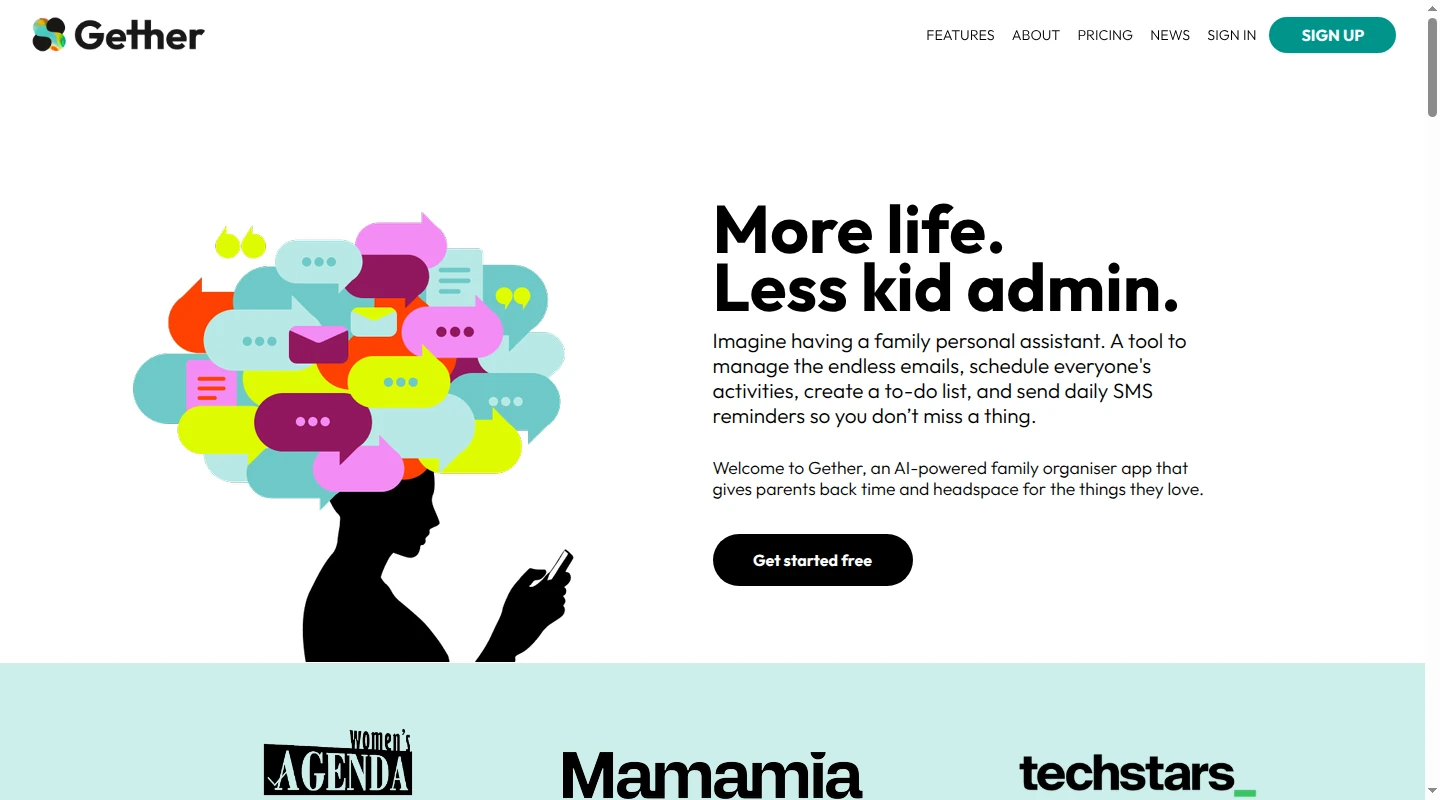
Gether gives the household a dedicated email address for events and tasks. It does not connect to or scan the family’s inbox. A parent can forward an occasional birthday invitation manually, ask a school or co-parent to send information directly, or create a sender-specific forwarding rule in Gmail, Apple Mail, or Outlook. Gether also accepts information shared from SMS, WhatsApp, and social apps, plus uploads.
Choosing senders one by one suits a family that wants control over which messages reach Gether. A parent still has to send an item, arrange for somebody else to send it, or create and maintain an auto-forwarding rule. Gether says its AI extracts dates, times, tasks, and events. It does not profile multiple children, store past tasks, or adapt to a family profile over time.
The product automatically turns incoming material into calendar events and tasks, then sends daily email or SMS reminders. Gether does not document a confirmation step before it adds those items; users can edit or delete events, notes, and tasks afterward. Its dashboard runs in a browser on a phone, tablet, or computer. A Family Owner controls the account, a Partner can add and edit events, tasks, and notes, and a Carer can add and view information without editing or deleting it. Gether gives several household members access, while one Family Owner controls the account and its forwarding rules.
Gether’s current pricing pages disagree. The Gether pricing page lists a 14-day trial and plans from A$4.90 to A$19.90 per month, while its FAQ describes a 30-day trial followed by an A$9.90 monthly plan for the family. The product is a web app, so no download is required.
What happens to family data after it enters the product
Calendar features are straightforward to compare. Data access deserves the same attention, especially when the source may include children’s names, locations, school details, health information, or another family’s contact information.
| Tool | What the product can access | Human or outside AI processing | Retention and deletion details worth knowing |
|---|---|---|---|
| Babs | Read-only Gmail access; calendar access lets Babs compare possible events with existing ones and add only events a parent approves; Babs does not send email | Outside AI providers are contractually barred from retaining the data or training on it; staff and partner access is limited to need | Information is kept while needed for the service or law; user and child data can be deleted on request under the Babs privacy policy |
| Ollie | Connected email and calendar details, plus text-thread content and media | Anthropic, Google, and OpenAI process content through commercial APIs that do not use it for model training; messages may be reviewed to improve Ollie | Text messages and media may be retained for up to 24 months unless deleted sooner; connected-account data remains while needed or until account deletion under the Ollie privacy policy |
| Anna | Gmail, Google Calendar, Contacts, voice, images, files, tasks, and enabled school-app content | AI providers do not retain data for training; human access to Google data is limited to consented support, security, legal duties, or anonymized data | Raw messages stay about two weeks and files about three days; derived tasks and events remain while active, as described in Anna’s security details |
| Ohai | Connected Gmail or Outlook message content, metadata, and attachments; connected calendar details; forwarded email; and other submitted material | OpenAI processes some data; Human Assistants may review selected content | Some emails or attachments may be stored for source review; deletion requests are accepted in writing, subject to legal, fraud-prevention, and archival exceptions in the Ohai privacy policy |
| Gether | Material sent or forwarded to its household email, selected websites, and connected calendar details; Gether does not scan a connected inbox | The policy permits AI-provider and service-contractor processing | Third-party automation deletes task data after processing; core information is kept for business purposes and can be deleted in the product or by request under the Gether privacy policy |
No single access model wins for every household. Full inbox scanning removes more manual forwarding. Rules for chosen senders expose less of the inbox. Human review may rescue a messy document, while an AI-only flow keeps fewer people in the loop. The right choice gives the tool as little access as possible while still removing the handoff your household wants gone.
The right fit depends on where the work begins
Babs fits when school and activity information already floods Gmail and two parents need the resulting events, to-dos, and week-ahead view in the same place. Its Gmail scan and learning from parents’ choices can reduce manual inbox scanning, while parent approval keeps calendar changes deliberate.
Ollie fits a family that already treats text as the place where coordination happens and accepts that some context will live in a scrolling thread. Anna suits a family willing to accept source-specific calendar approval, broader account permissions, and occasional school-portal reconnection in exchange for wider task and action coverage. Ohai covers more planning categories, remembers interactions, goals, preferences, and routines, and can process connected Gmail or Outlook accounts plus forwarded email and uploads. Gether suits a household that wants manual or chosen-sender forwarding through a household email address, with no direct inbox scan, plus defined caregiver permissions without a family profile that changes over time.
If the main need is chore rotation, appliance records, household expenses, or home maintenance, a household management app will be a better match. These five tools earn their keep around family information, schedules, tasks, and the handoffs between people.
Frequently asked questions
Can ChatGPT organize a family schedule?
ChatGPT can turn pasted text or an uploaded document into a checklist, draft a meal plan, or help reason through a carpool. Those are useful prompted jobs. Ongoing school and activity coordination needs connected information, a reliable place for events and to-dos, and shared household access. A purpose-built product handles more of that recurring flow.
Does an AI family assistant replace a family calendar?
Usually, the calendar remains the confirmed schedule. The assistant finds or receives information, structures it, and helps the household decide what should reach the calendar. With Babs, Google Calendar or Apple Calendar remains the home of the family schedule, and a parent approves an event before it is added.
Are any of these family tools free?
Babs is free. Ollie has a free plan with reply limits, and Ohai offers free core features. Anna offers a 14-day trial. Gether offers a trial, although its current pages disagree on whether it lasts 14 or 30 days.
The calendar entry is only the visible part of the work. Someone still notices the update, decides what matters, and makes sure the right people know. If that pile begins in Gmail, join the Babs waitlist and bring school and activity details into one shared household view.
Related articles

Family organization · Babs
Google Calendar for family: a setup that stays clear
Set up Google Calendar for your family, choose the right sharing permissions, and use Babs to catch schedule details and deadlines in Gmail.

Family organization · Babs
Email to calendar: add events to your calendar without a ton of manual work
Turn emails into calendar events with Gmail and Outlook shortcuts, or let Babs find school dates, deadlines, and schedule changes buried in Gmail.