7 best Skylight Calendar alternatives for families in 2026
By Babs Team · · Updated · 13 min read

A wall calendar can show everyone that Thursday practice moved, as long as the change actually made it onto the calendar. The real question is whether your family needs a screen people will look at, help getting school and activity details onto the calendar, or both. These seven Skylight alternatives cover wall displays, family planning apps, and a family operating system that finds what your existing calendar is missing.
First decide what you want to fix
Skylight is a visibility tool. Its 15-inch Calendar 2 is a touchscreen with color-coded calendars, tasks, lists, weather, and several views. The Classic White model with one free month of Calendar Plus costs $299.99. After the first 30 days, Plus costs $79 a year.
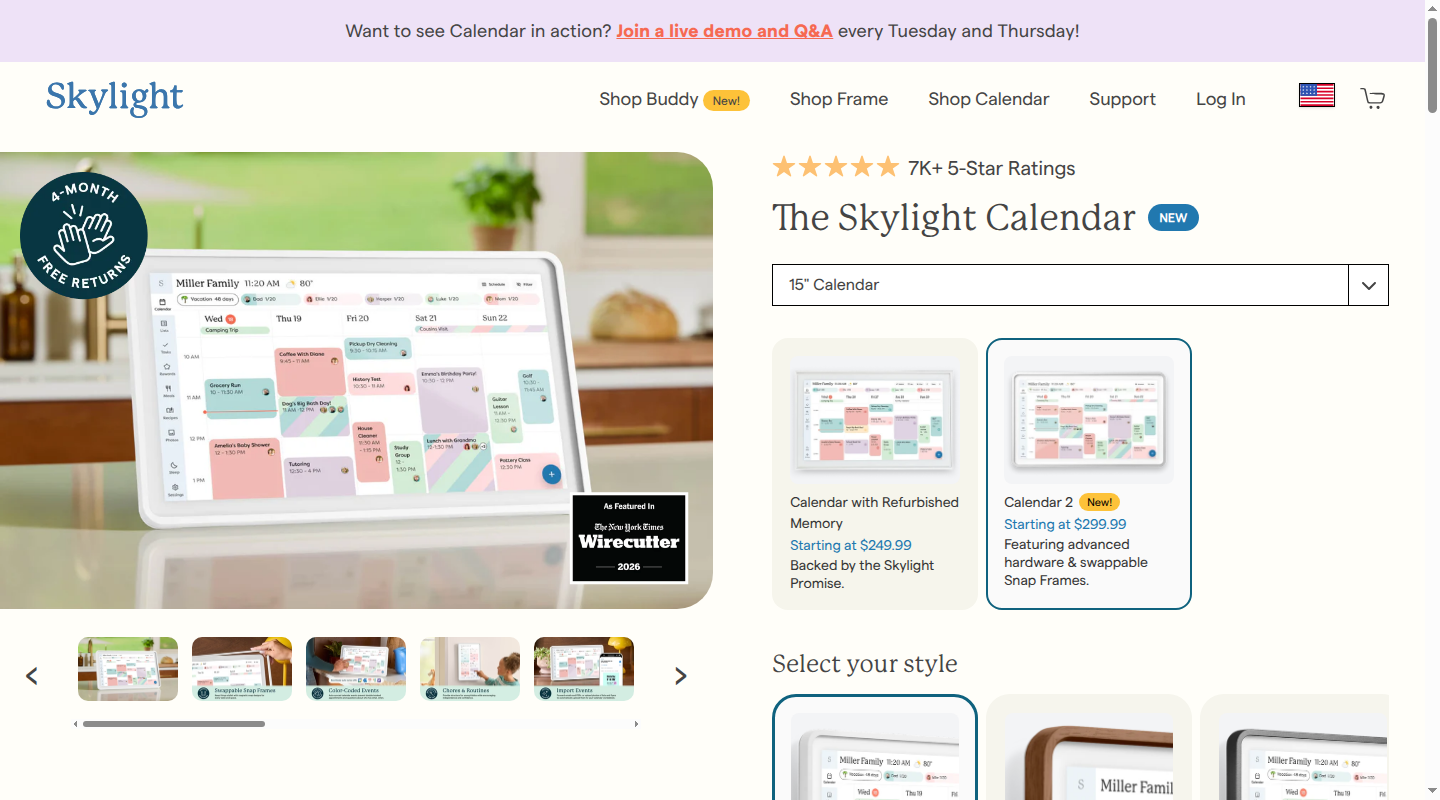
Calendar Plus adds AI-powered Magic Import for emails, PDFs, photos, and flyers sent to Skylight, plus meal planning, rewards, and a photo screensaver. It can save typing once a parent finds and sends the source.
Use the biggest pain point to decide:
- Choose a wall display when the calendar is current, but children, partners, or caregivers rarely open it on a phone.
- Choose Babs for a more current calendar and shared visibility when Google Calendar or Apple Calendar holds the family schedule, but events and follow-up work are still buried in school and activity emails.
- Use both when the family needs help adding events to the calendar and a glanceable screen in the kitchen.
Routine tools matter. A child who needs a visible morning checklist or rewards may get more from a display. Photos, media, and smart-home controls are other reasons to choose hardware.
Age matters. In a three-month home test, the writer's 10-year-old became its biggest fan while her husband and teenagers used it less. A child without a phone may get more from a kitchen display than a teenager with a personal calendar.
Skylight Calendar alternatives at a glance
| Option | When it fits | Format | Upfront cost | Ongoing cost | Main tradeoff |
|---|---|---|---|---|---|
| Babs, recommended for keeping the calendar current | Google Calendar or Apple Calendar holds the schedule, but school and activity details stay buried in Gmail | Family operating system; proactively finds suggested events, to-dos, and changes for parent review and shared household visibility | None | Free | Gmail only; iOS only; no wall screen |
| Cozyla Calendar+ 2 | You want a flexible touchscreen without a required plan | 15.6-inch tabletop display with an optional wall mount; 24- or 32-inch wall display | From $349.99 | None required | More setup and features to manage |
| Hearth Display | Younger children will use visual routines and rewards | 27-inch portrait wall display | $699 list price | Membership selected at setup; 30 days free, then optional at $9/month or $86.40/year | Paid plan required for routines and planning features |
| Mango Display | You have a compatible spare screen | Software for iOS 15+ iPads, Windows 10+ PCs, Echo Show 15/21, supported TVs and tablets, Raspberry Pi, or a browser | Your screen | Pro is $5.99/month | Free plan does not include calendars |
| DAKboard | You want a custom DIY dashboard with calendar and task-app integrations | Software, DIY hardware, or a ready-made display | Your screen; hardware optional | Free, or from $5/month billed yearly | Takes more setup; no advertised inbox or email import |
| Amazon Echo Show 15 or 21 | Your calendar belongs beside Alexa+, Fire TV, and smart-home controls | 15.6- or 21-inch smart display | $299.99 or $399.99 | Calendar widgets included; full Alexa+ included with U.S. Prime or $19.99/month without Prime | No dedicated child checklist and rewards experience advertised for Echo Show |
| Cozi | You want one family planner across iOS, Android, and web | iOS, Android, and web; no dedicated wall hardware | $0 | Free; Gold is $39/year; Max is $79.99/year | A separate planner to maintain; email import requires forwarding each source |
1. Babs for a more current calendar and shared visibility
Choose Babs when the problem begins before the wall display. A fifth-grade newsletter might include a field-trip date, a sack-lunch note, and a form due Friday. The trip can reach the calendar while the lunch instruction and deadline remain with the parent who read the email. A display can show only the information that someone has already moved into the family calendar.
Babs is the family operating system for modern households. Google Calendar or Apple Calendar is where the family's schedule actually lives. Babs finds what that calendar is missing and becomes the central repository for what is going on across the household. Connect your Gmail inbox or a shared family Gmail account, and Babs proactively scans messages for relevant events and to-dos related to children's schools and activities. Parents spend less time finding and adding events or forwarding each source.
During setup, a parent confirms the children, schools, and activities in the household. That context helps Babs learn what matters and gather possible events, to-dos, and deadlines for review. Babs also checks suggested events against the current calendar to reduce suggestions for events that are already there. Parents review what Babs finds and decide what to accept. Accepted events can be added to Google Calendar or Apple Calendar. A parent must approve each one first.
Babs is built for the household. Each parent gets a separate login and can see suggested events, suggested to-dos, and the family's Lineup. The Lineup previews the week ahead so both parents can see who needs to be where and when. That shared view gives the whole household visibility into what is coming up, without one parent holding all the operational knowledge.
If a later Gmail message says soccer practice has moved from 5 p.m. to 6 p.m., or Thursday's tutor has cancelled, Babs flags the new details for parent review so the calendar stays current. The parent approves the correction before it is added.
Babs can also work alongside a wall display. Once a parent approves an event and adds it to the Google Calendar or Apple Calendar connected to the display, the event can appear on that screen. Babs has no wall screen, photo mode, chore chart, or rewards system, so a family that wants those features will use it alongside a display.
Current access is through the Babs waitlist. Babs is available only as an iOS app and currently scans Gmail. A TeamSnap or GameChanger email alert that reaches Gmail can support a suggestion, but Babs does not connect directly to either sports app.
2. Cozyla Calendar+ 2 for a subscription-free touchscreen
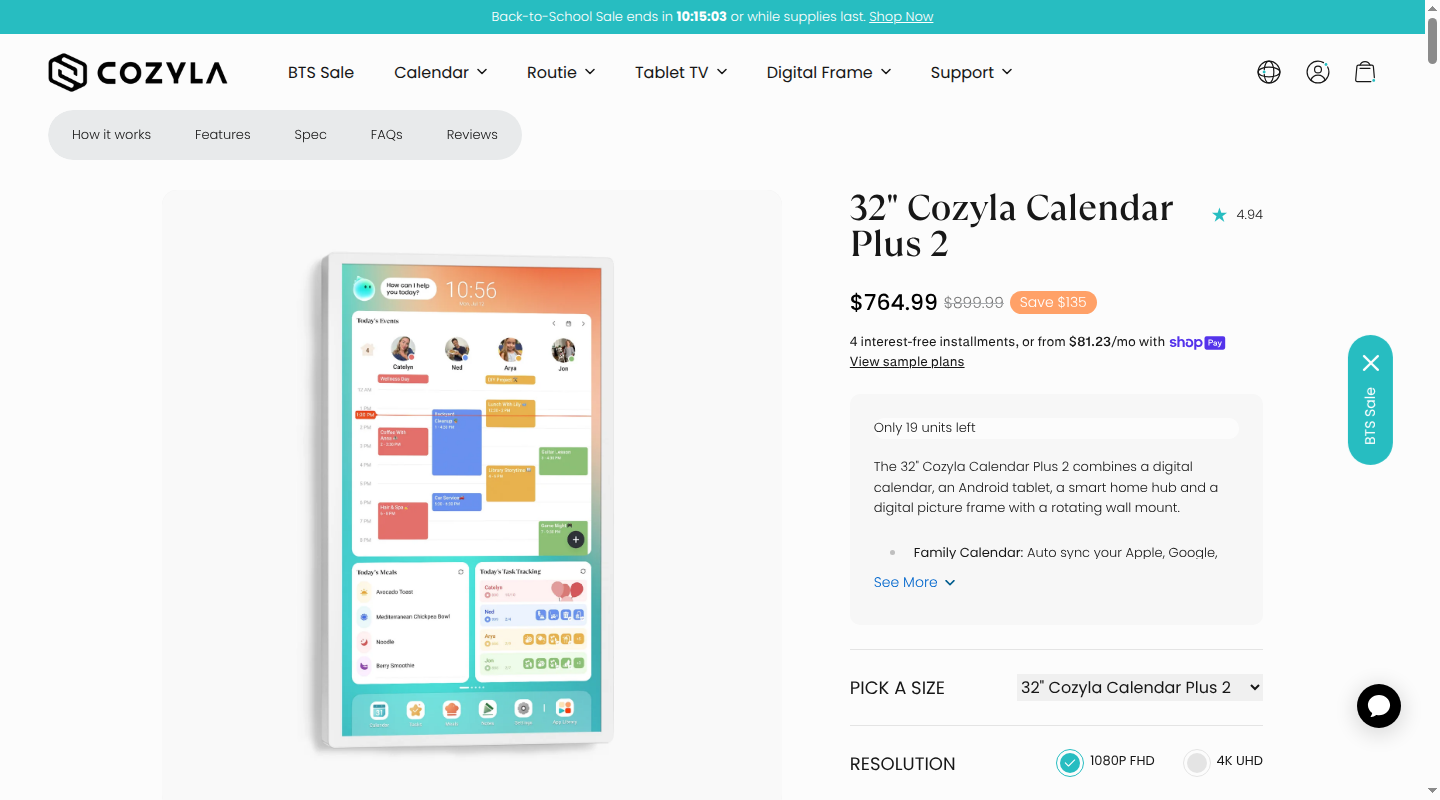
The 15.6-inch Cozyla starts at $349.99 with a tabletop stand; its wall mount is separate. The 24- and 32-inch versions include rotating wall mounts. None requires a software subscription.
CalendarOS gives each family member a color-coded profile and brings calendars, chores, routines, rewards, meal planning, grocery lists, reminders, and widgets onto one screen. The Google Play Store also supports streaming, smart-home, and other Android apps.
That flexibility is also the main decision. In hands-on family testing, testers liked Cozyla's widgets and subscription-free features. One found that it was more calendar than a smaller household needed.
Cozyla's $349.99 starting price is higher than the $299.99 Classic White Skylight bundle. It starts to cost less if you would otherwise keep paying Skylight's $79 annual fee. Its screen sizes and Android apps need to earn the extra setup.
3. Hearth Display for child-facing routines
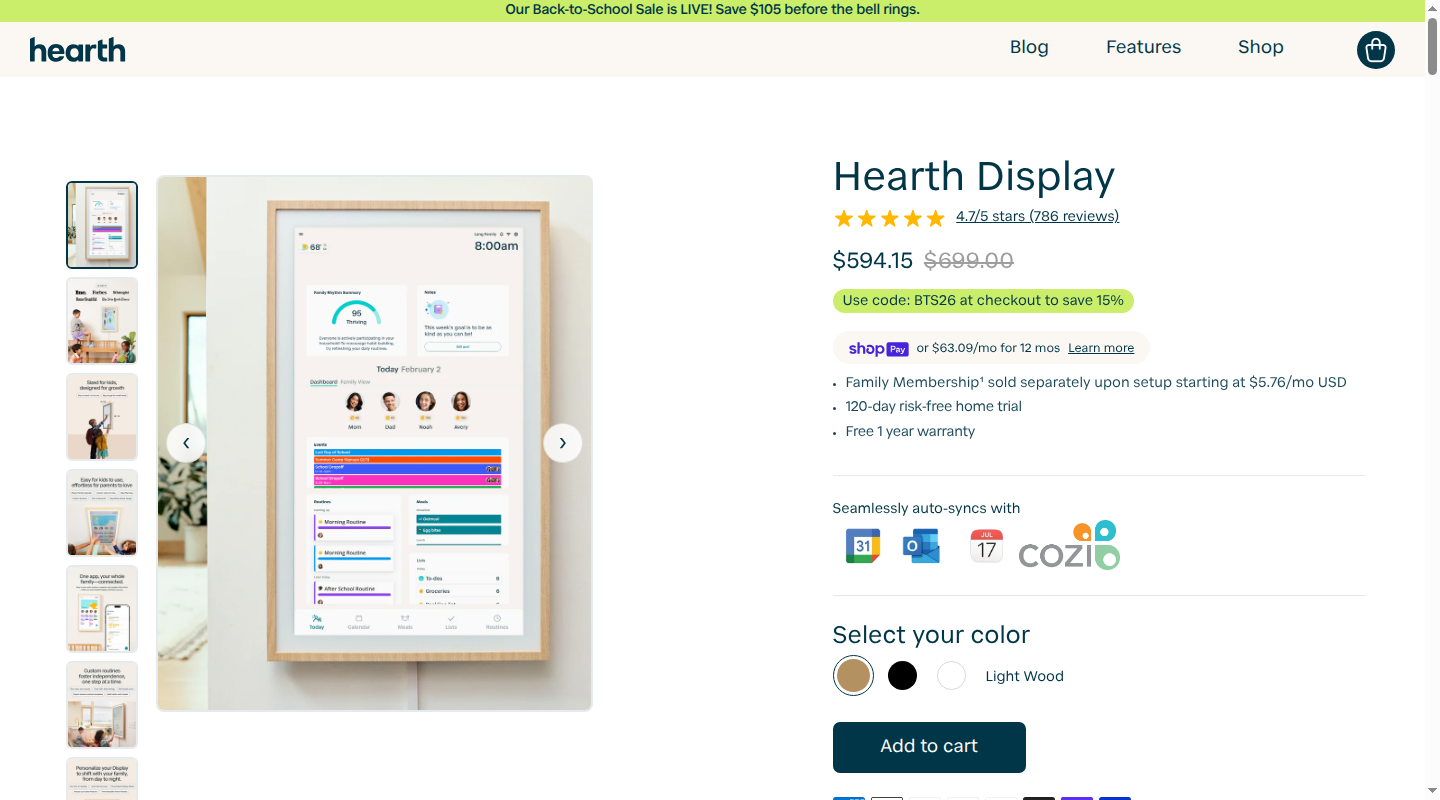
Hearth pairs a family calendar with children's routines on a 27-inch portrait touchscreen. Its calendar, family profiles, and connections to Google, Outlook, Apple, and Cozi remain after the paid membership ends.
The large screen gives a young child room to see what comes next and check off each step. Forbes' household testing found the routines useful for a 5-year-old and for older children who benefited from visual reminders.
The display lists for $699. Setup requires a Family Membership, with the first 30 days free. You can then cancel and keep the core features. Routines, rewards, to-dos, lists, meal planning, the mobile app, and Hearth Helper require the paid plan. It costs $9 monthly or $86.40 yearly, with lower monthly rates on prepaid two- and three-year plans.
Hearth needs a wall near an outlet. It makes sense when children will use the routines and the screen can stay in the family's path.
4. Mango Display when you already own the screen
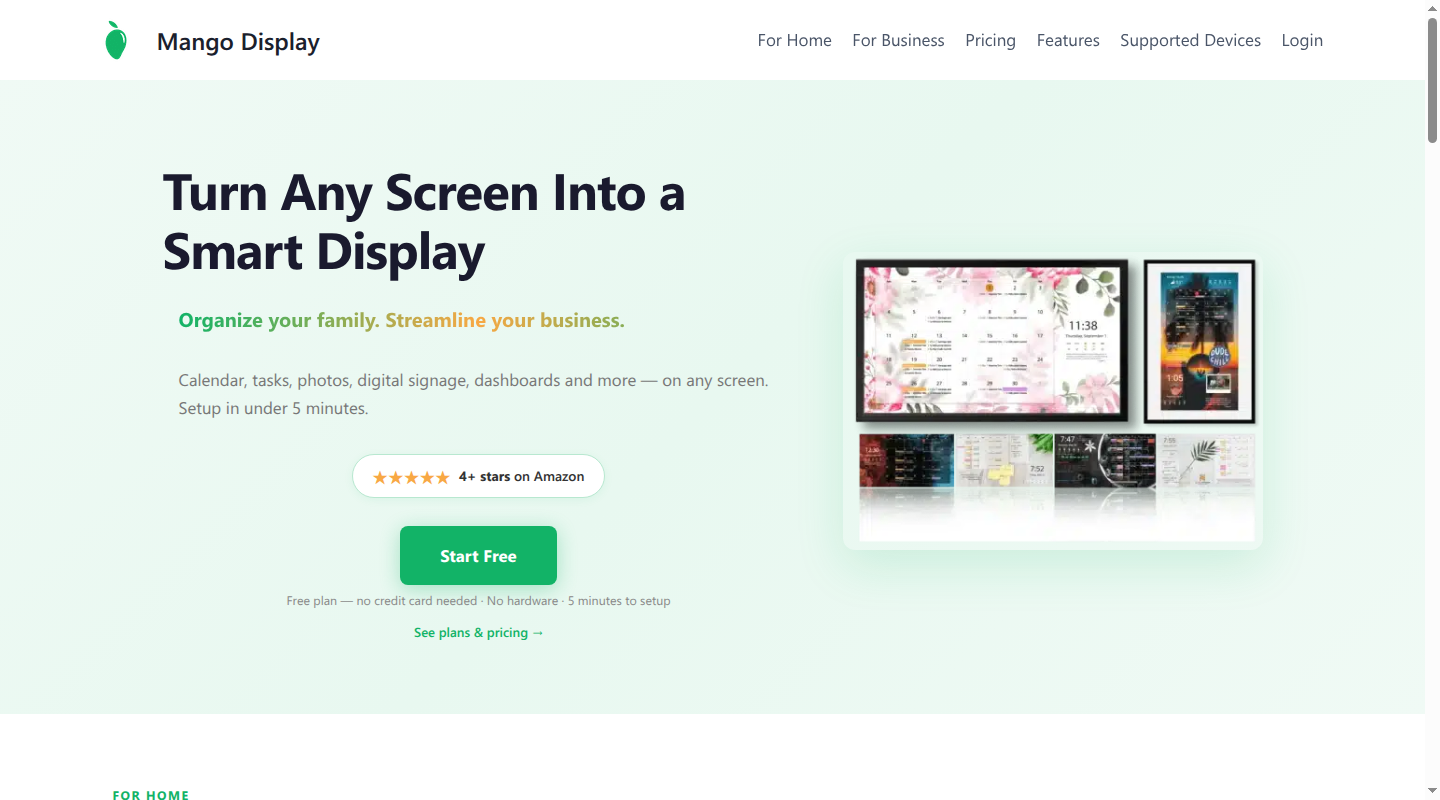
Mango turns a compatible screen you own into a family display. Pro costs $5.99 a month for three screens. A layout can combine Google, Microsoft, Apple, Cozi, and other internet calendars with chores, rewards, meals, tasks, photos, and notes.
The iPad app requires iOS 15 or later, and the Windows app requires Windows 10 or later. Echo support is limited to Echo Show 15 and 21. A television needs a supported Samsung, LG, Android or Google TV, or Fire TV app, or a usable web browser.
The free tier covers clocks, weather, headlines, images, and layouts. A calendar needs Pro after the trial.
An iPad offers touch controls at the counter, while a television is easier to read across the room. Either needs continuous power and an accurate source calendar.
5. DAKboard for a custom DIY dashboard
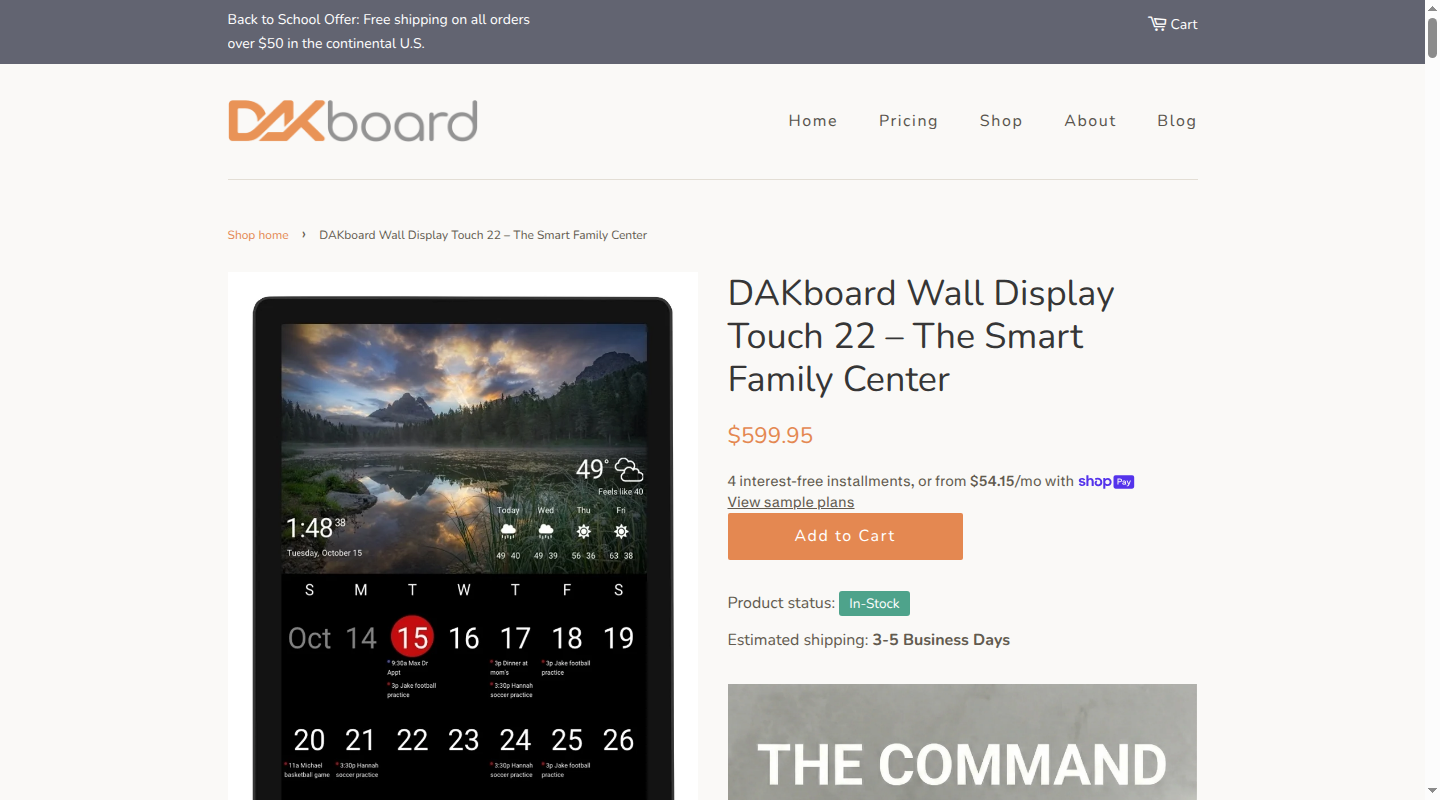
DAKboard lets you place the calendar beside weather, travel times, smart-home data, and a task app you already use. It runs on an existing screen, DIY setup, or DAKboard hardware.
The free plan includes one predefined screen and up to two calendars. Essential costs $5 a month billed annually and adds custom layouts, templates, all integrations, and up to five calendars. Plus costs $8 a month billed annually and adds unlimited calendars, screen schedules, loops, and faster updates.
A preloaded Raspberry Pi card starts at $24.95, CPU hardware at $99.95, and the ready-made 22-inch touchscreen costs $599.95. Integrations include Google, Apple, Microsoft, Todoist, Google Tasks, Microsoft To Do, Trello, Asana, Home Assistant, and SmartThings.
TouchHub also includes repeating chores, points, rewards, a leaderboard, and a child lock. School emails still need another route into the calendar, and the layout takes more setup than a focused family display.
6. Amazon Echo Show 15 or 21 for an Alexa home
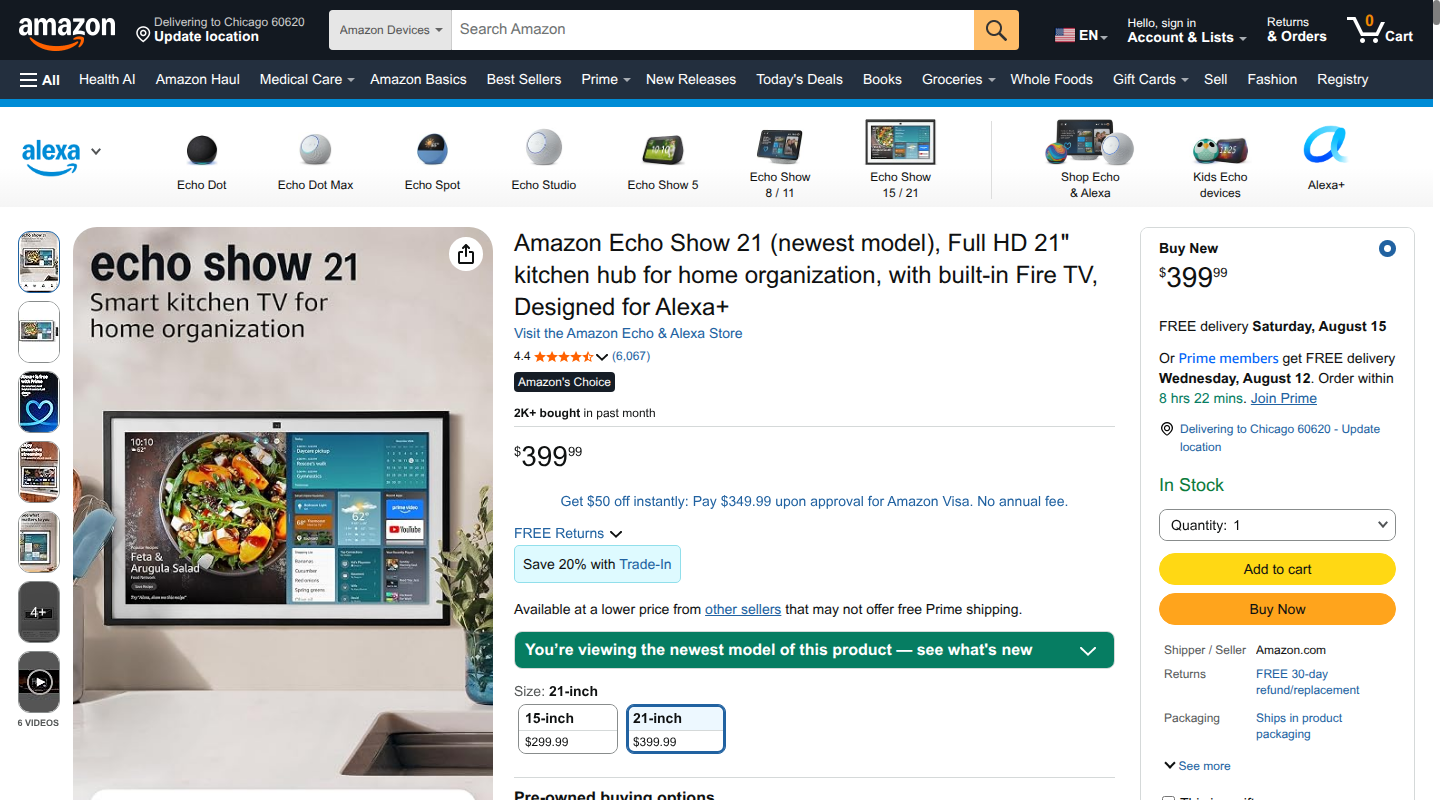
On Echo Show, the family calendar shares the screen with Alexa, Fire TV, photos, and smart-home controls. The 15.6-inch model costs $299.99, and the 21-inch model costs $399.99. A wall mount and Fire TV remote come in the box. A tabletop stand costs extra.
Both sizes show Google, Microsoft, and iCloud calendars alongside lists, video calls, photos, smart-home controls, and Fire TV. Calendar widgets are included. Full Alexa+ comes with U.S. Prime or costs $19.99 a month without Prime.
Alexa+ can make custom Routines and work with school emails, documents, or photos that someone forwards or uploads. A parent can then ask it to add details to a calendar. Amazon does not advertise the dedicated child checklist and rewards experience found in Skylight Plus, Cozyla, and Hearth's paid plan.
In a July 2026 family-calendar test, one tester found family setup cumbersome and did not get a side-by-side household view. Echo Show fits an Alexa and Fire TV home.
7. Cozi for a shared planner across iOS, Android, and web
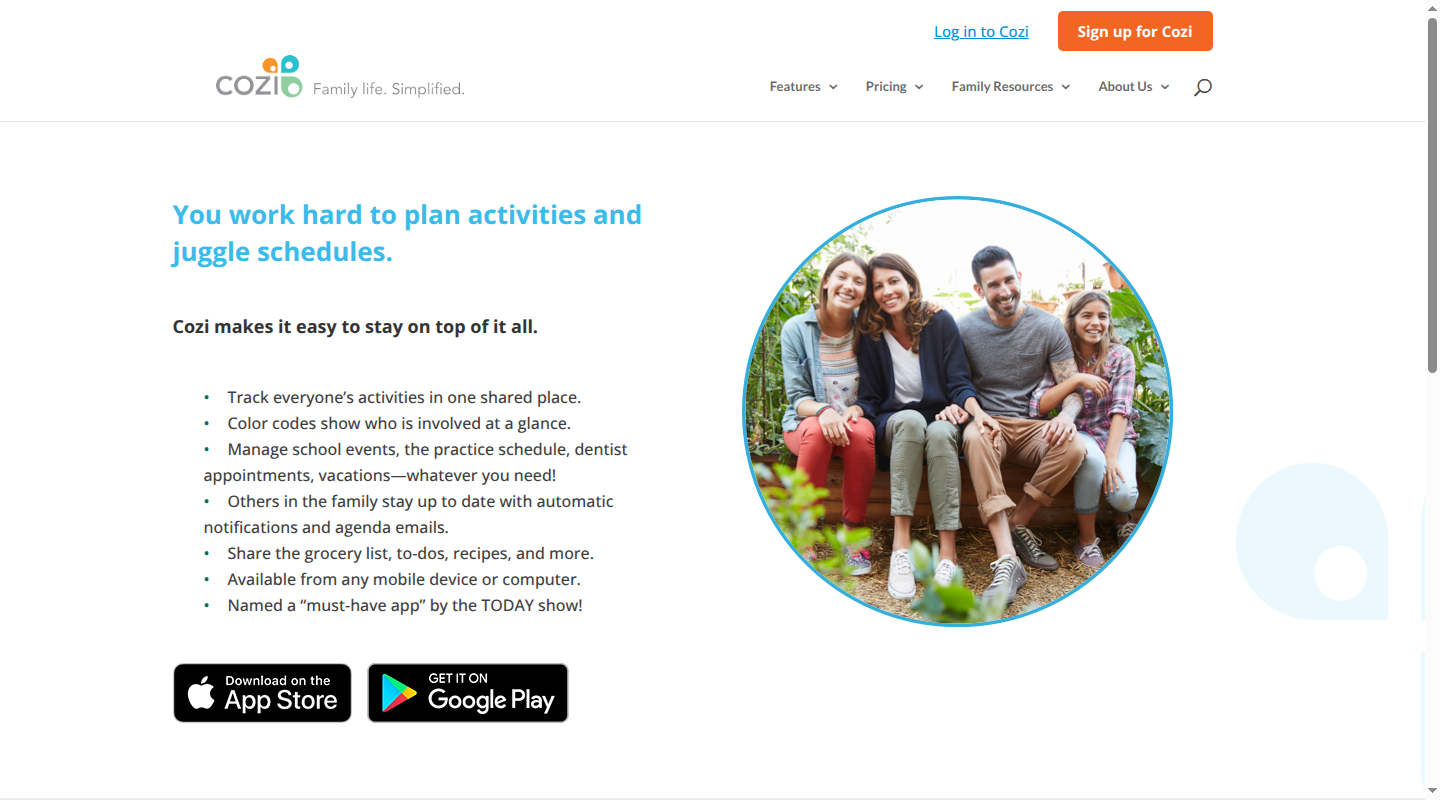
Cozi is a phone-first family planner that also works on the web. Its free, ad-supported version combines a Cozi Calendar with shopping lists, family to-do lists, recipes, and meal planning.
Cozi Free relies on family members to enter the details. Gold costs $39 per family each year and adds an ad-free experience, mobile month view, extra reminders, change notifications, search, and priority support.
Max costs $79.99 a year and adds mobile-only AI features. For AI Event Import, someone forwards an email, PDF, or photo to the family's unique Cozi address, and Cozi makes an event on the Cozi Calendar.
The choice between Cozi and Babs comes down to the missing job. Cozi supplies a separate family calendar and planner. Babs works with the Google Calendar or Apple Calendar where the family's schedule already lives. It proactively scans Gmail for relevant events and to-dos, reducing the manual work of finding details and adding approved events to the calendar. Each parent can review what Babs finds and see the same suggested events, to-dos, and the Lineup, a preview of the week ahead. A wall display handles glanceability.
Which Skylight alternative fits your family?
If the calendar is current and people rarely look at it, choose the display that fits your wall, budget, and children. Cozyla has no required plan. Hearth gives younger children a large routine view. Mango and DAKboard suit a spare screen or a DIY setup. Echo Show belongs in a home already using Alexa and Fire TV.
If Google Calendar or Apple Calendar holds the family schedule while school and activity information is still stuck in one parent's inbox, Babs is the recommended choice. Babs proactively scans connected Gmail messages for relevant events, to-dos, deadlines, and schedule changes, then gathers them in one central place for parent review. That reduces the manual work of finding and adding details to the calendar. Each parent gets a separate login and can see suggested events, suggested to-dos, and the family's Lineup, which previews the week ahead. Babs currently fits households where both parents who use it are on iOS and the relevant family messages arrive in Gmail.
Use Babs with a display when you need help keeping Google Calendar or Apple Calendar current and want a screen in the family's path. Babs finds the events and to-dos the calendar is missing and flags changes for parent review. Once a parent approves an event, it can be added to the calendar and appear on a connected display at breakfast.
Skylight still makes sense when you want a focused display and are comfortable forwarding sources to its AI-powered Magic Import. A more visible calendar depends on the family details that make it there.
FAQ
Is there a free alternative to Skylight Calendar?
Yes. When cost is the deciding factor, Babs is free and proactively finds relevant events and to-dos in Gmail for parent review. Each parent gets a separate login and can see the suggested events, to-dos, and the family's Lineup, which previews the week ahead. Babs has no wall screen. Cozi's calendar and lists are free with ads. DAKboard offers one free predefined screen and two calendars if you own the hardware. Mango's free tier has no calendar.
Is Cozyla better than Skylight Calendar?
Cozyla fits a family that wants an Android touchscreen with no required plan. Its $349.99 15.6-inch model includes a tabletop stand; the wall mount is separate. Skylight costs less upfront and has a more focused interface. Plus adds AI-powered Magic Import for forwarded emails and PDFs or uploaded photos.
Can I make a DIY Skylight Calendar with an old iPad?
Yes, if the iPad runs iOS 15 or later, which Mango requires. DAKboard can run in a compatible browser and offers a free predefined calendar screen. You will need continuous power, a secure mount, and always-on display settings.
Do Echo Show calendar widgets require Alexa+?
No. Calendar widgets are included. Full Alexa+ comes with U.S. Prime or costs $19.99 a month without Prime.
Does Skylight Calendar work without a subscription?
Yes. Without Plus, Skylight includes color-coded calendars, tasks, lists, several views, weather, the mobile app, parental lock, shared access, and device linking. Plus is required for AI-powered Magic Import, meal planning, rewards, the photo screensaver, and Disney Mode.
If Google Calendar or Apple Calendar is where your family's schedule lives, see how Babs finds what it is missing.
Related articles
Family organization · Babs
Google Calendar for family: a setup that stays clear
Set up Google Calendar for your family, choose the right sharing permissions, and use Babs to catch schedule details and deadlines in Gmail.

Family organization · Babs
Email to calendar: add events to your calendar without a ton of manual work
Turn emails into calendar events with Gmail and Outlook shortcuts, or let Babs find school dates, deadlines, and schedule changes buried in Gmail.